
Nutrition facts of sweet potatoes
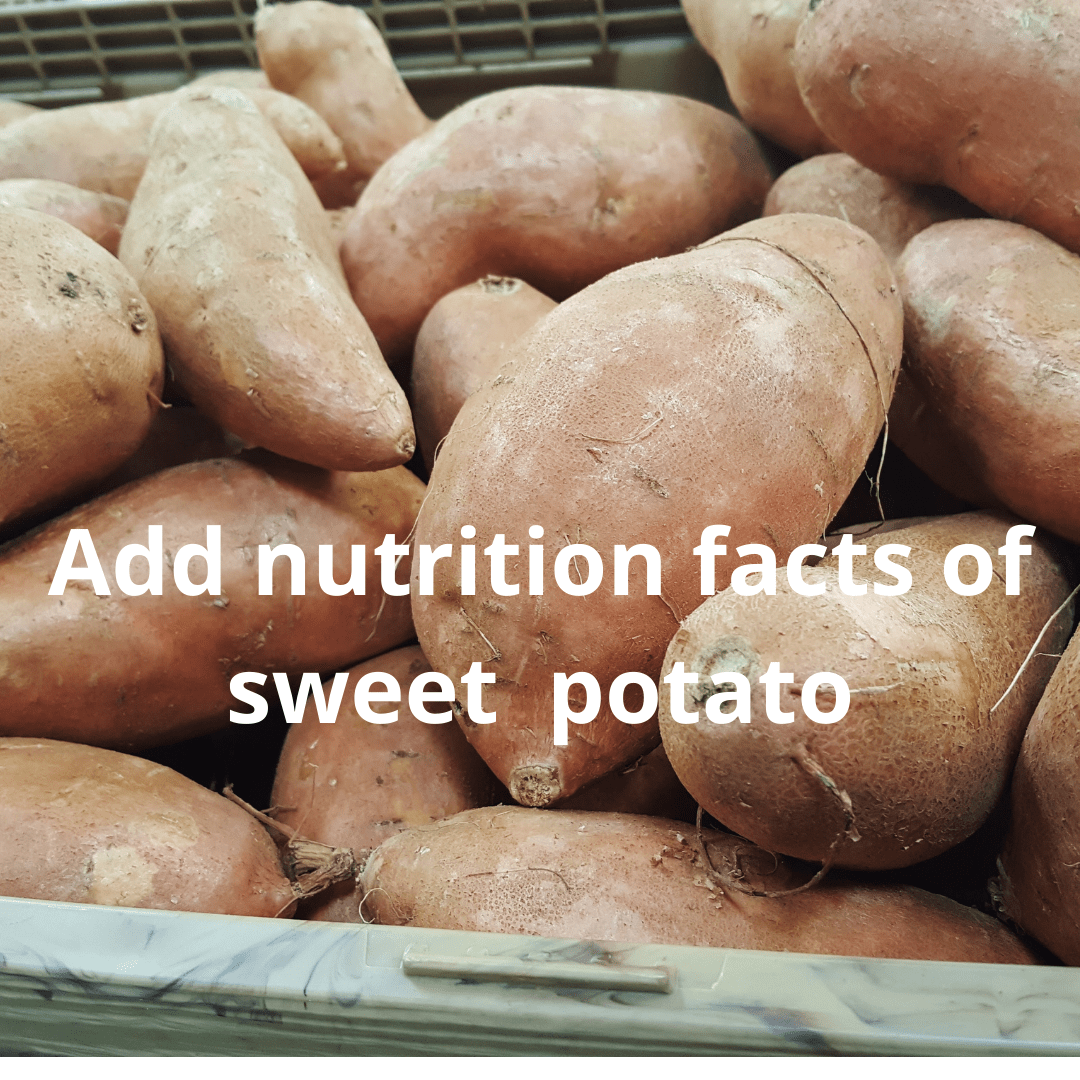
Sweet potatoes are more or less elongated tubers, very thin skin. The flesh of this vegetable oscillates from white to purple, passing through all the shades of orange. If all varieties are edible, we usually agree that the sweet potatoes of purple orange are the tastiest and are also those that contain the most nutrients. In Quebec markets, there are several varieties of American sweet potatoes: Covington, Beauregard, Evangeline, and Murasaki.
Nutrition facts of sweet potatoes: Nutrition Facts Amount Per 100 g Calories 45 kcal * Carbohydrates 11 g * Dietary fiber 1 g * Sugars 3 g * Fat 0.1 g Protein 1 g Nutrition facts taken from Nutrition data.self Nutrition facts based on amount of 100 g of product
What are the nutritive properties of sweet potatoes?
The sweet potato contains fiber, vitamin B6, magnesium, and potassium. According to Nutrition data, it is among vegetables that are richest in vitamin A.
How to prepare them? Sweets can be cooked however you want: baked, boiled, grilled … However, some people inflate their recipe by adding salt for example! Better keep the salts aside if you want your dish to have good nutritional values!
Nutritionists advise steaming or boiling this vegetable for its greatest benefit. Nutrition facts were given per 100 g of the product as most nutrients tables do.
You need not eat an entire kilogram (or pound) in one setting moderation rules always apply 🙂 Nutrition is a complicated subject so in case you want to read more I advise reading Nutrition facts taken from Nutrition data based on amount of 100 g of product.
How to deal with the leftovers? We can get rid of them by simply putting them in the refrigerator :-). Nutrition facts were given per 100 g of the product as most nutrients tables do.
Season: Sweet potatoes are available year-round in all grocery stores.
Interesting information: A research conducted at the University of North Carolina concluded that the carotenoid content of the sweet potato increased by 18% after 8 months of storage.
Purchase guide for sweet potatoes
To choose sweet potatoes, ensure that they are:
Firm
Murderous
Scentless
Preferably, the flesh must be of a beautiful orange color quite uniform
Conservation
The sweet potato is more fragile than the potato. It keeps one week at 10 days in a cool and dry place, safe from light.
it is best not to refrigerate this vegetable unless it is cooked to avoid a change of texture
Health benefits of sweet potatoes
Less caloric than the traditional potato, sweet potato is a delicious food that wins to be asked more often on the table. A portion of 160 g (a medium size tuber) contains only 160 calories, while stalling the stomach!
The sweet potato contains:
- Starch
- Antioxidants
- Vitamin A, B, C, D
- Copper
- Manganese
- Carotene that improves the complexion
Culinary tips of sweet potato
The sweet potatoes decorate a large number of recipes, but they can also be used in support for your roasted meat and fish. In this case, we can cook for water or steam, in the oven, to the pan after cutting them in slices or pieces.
The peel is edible and contains a lot of nutrients, so it is preferable to keep it, after having brushed it. And even if you decide not to eat the skin after cooking, you will have won some of its benefits by keeping it on the vegetable during cooking.
The sweet potato can also be tasted:
- In soups, soups, and vegetable creams.
- In the stews, the boiled, the fireproof. On the other hand, they must be included in the recipe about 30 minutes before the end of the cooking, otherwise, they will become soft and will melt in the sauce.
- In quiches, omelettes and friatattas.
- Pure, with other vegetables (potatoes, carrots, squash, celery-rave) or alone.
- Beauty, with onions, fresh coriander, and season with pepper and cumin.
- In gratin and pans.
- In fries and chips.
- You can grate the flesh and make small cakes, like the röstis.
- We can integrate the flesh cooked and reduced into puree into brioches, sweetbreads, muffins, cakes, pancake appliances, cookies, pudding, etc.
- We also do blanks, burned creams, and other integrates.
- You can make jams, marmalades and fruit paste.
Conclusion: The different varieties of sweet potatoes are best suited for certain culinary purposes. For example, the Evangeline variety is better used in recipes that incorporate pork or beef because it has a delicate flavor and texture when cooked with these meats.
If you find yourself without a recipe to use your new purple orange sweet potato, have no fear!
We offer an assortment of delicious healthy meal ideas on our blog page so that you can always be prepared. Which type of American sweet potato do you prefer? Why not share your favorite way to prepare this vegetable below in the comments section?