
DietFYI • Diet Hub Pillar
Mediterranean Diet
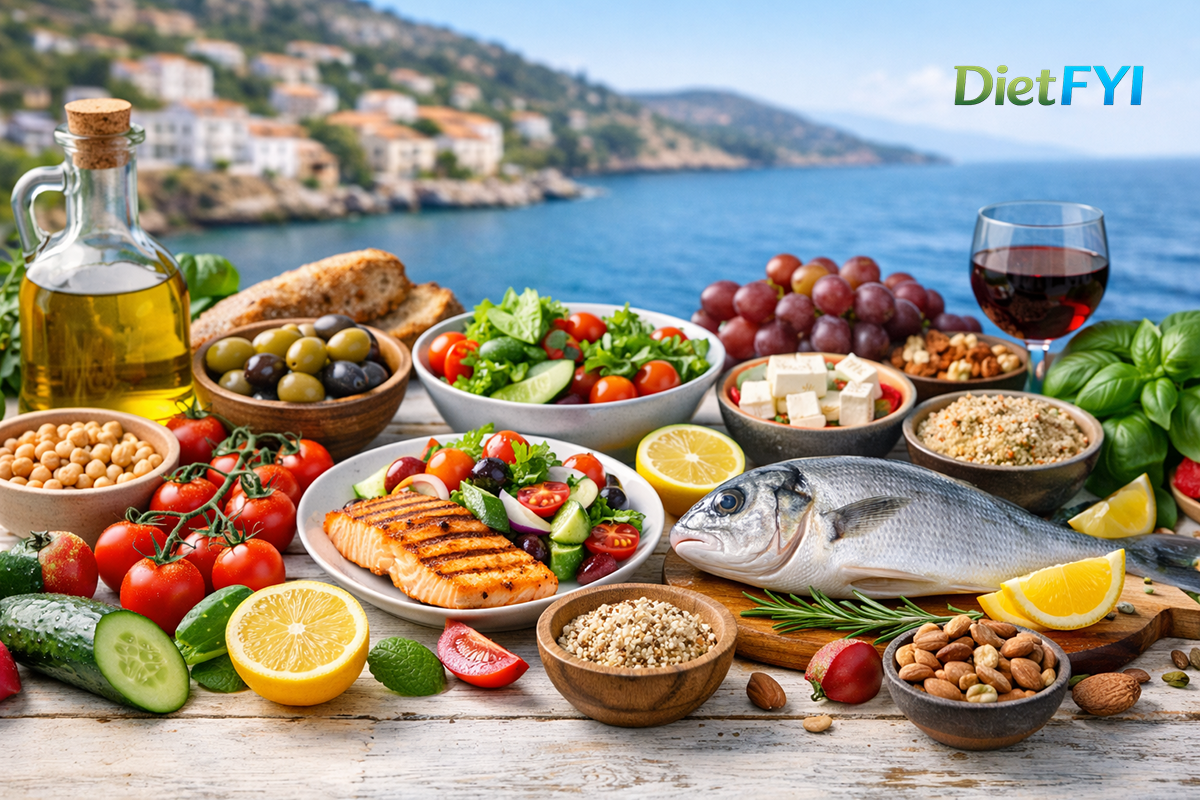
The Mediterranean diet is a flexible way of eating built around vegetables, fruit, beans, whole grains, olive oil, seafood, and simple home-cooked meals. It’s not a strict “rule diet”—it’s a repeatable pattern you can actually live with.
What Is the Mediterranean Diet?
The Mediterranean diet is a food pattern inspired by traditional eating styles around the Mediterranean region. The focus is on whole, minimally processed foods—especially plants—plus healthy fats like olive oil, and regular seafood.
In plain English: build most meals with plants + protein + olive oil.
- Base: vegetables, fruit, beans, whole grains
- Fats: olive oil, nuts, seeds, olives
- Proteins: fish/seafood often; poultry/eggs/yogurt in moderation
- Limit: sugary foods/drinks, refined grains, ultra-processed foods
Why It Works (Without Feeling Like a “Diet”)
- High volume, high fiber → you feel full on fewer calories
- Balanced meals → steadier energy and fewer cravings
- Flexible → easier to stick with long-term
- Simple staples → you can repeat meals without boredom
Mediterranean Diet Foods List (What to Eat Most)
| Category | Best choices |
|---|---|
| Vegetables | Leafy greens, tomatoes, peppers, onions, cucumbers, zucchini, broccoli |
| Fruit | Berries, citrus, apples, grapes, melon (whole fruit > juice) |
| Beans & lentils | Chickpeas, lentils, black beans, white beans |
| Whole grains | Oats, brown rice, quinoa, whole wheat, farro (choose what you tolerate) |
| Healthy fats | Extra-virgin olive oil, nuts, seeds, olives, avocado |
| Protein | Fish/seafood, poultry, eggs, Greek yogurt, small portions of cheese |
What to Limit (Common Mediterranean Diet Mistakes)
- Sugary drinks & desserts (easy calorie trap)
- Ultra-processed snacks (chips, pastries, packaged sweets)
- Refined grains (white bread/pasta as the base of every meal)
- “Olive oil = unlimited” thinking (healthy, but still calorie-dense)
The Mediterranean Plate (The Easiest Way to Build Meals)
| Plate section | What goes there |
|---|---|
| ½ plate | Vegetables (salad + cooked veg works great) |
| ¼ plate | Protein (fish, chicken, eggs, beans) |
| ¼ plate | Whole grains or starchy veg (optional based on goals) |
| + fat | Olive oil, olives, nuts (small portions) |
Simple Meal Ideas
| Breakfast | Lunch | Dinner |
|---|---|---|
| Greek yogurt + berries + nuts | Big salad + tuna/salmon + olive oil | Fish + roasted veggies + quinoa |
| Eggs + sautéed veggies + fruit | Chickpea bowl + veggies + feta | Chicken + salad + olive oil dressing |
| Overnight oats + fruit + seeds | Leftover dinner + salad | Bean stew + greens + olive oil |
Beginner Starter Plan (Easy Wins)
- Switch to olive oil as your main cooking fat.
- Add vegetables to every meal (even frozen is fine).
- Eat seafood regularly (or choose lean proteins if you don’t do fish).
- Replace snacks with fruit, nuts (small), or Greek yogurt.
Who Should Be Careful
If you have medical conditions that require specific nutrition guidance (diabetes meds, kidney disease, eating disorder history, etc.), talk with a clinician or registered dietitian before making major diet changes.
This page is educational and not medical advice.
External References
Mediterranean Diet FAQ
What do you eat on the Mediterranean diet?
Mostly vegetables, fruit, beans, whole grains, olive oil, nuts/seeds, and regular seafood. Poultry, eggs, and dairy are usually eaten in moderation.
Is the Mediterranean diet good for weight loss?
It can be, especially because it emphasizes high-fiber foods and balanced meals that reduce cravings and mindless snacking.
Is pasta allowed on the Mediterranean diet?
Yes—portion and frequency matter. Many people do best when pasta is not the base of every meal and when it’s paired with vegetables and protein.
What’s the biggest Mediterranean diet mistake?
Treating “healthy” fats like unlimited calories. Olive oil and nuts are great, but portions still matter if weight loss is the goal.