
DietFYI • Intermittent Fasting Pillar
18-Hour Fasting
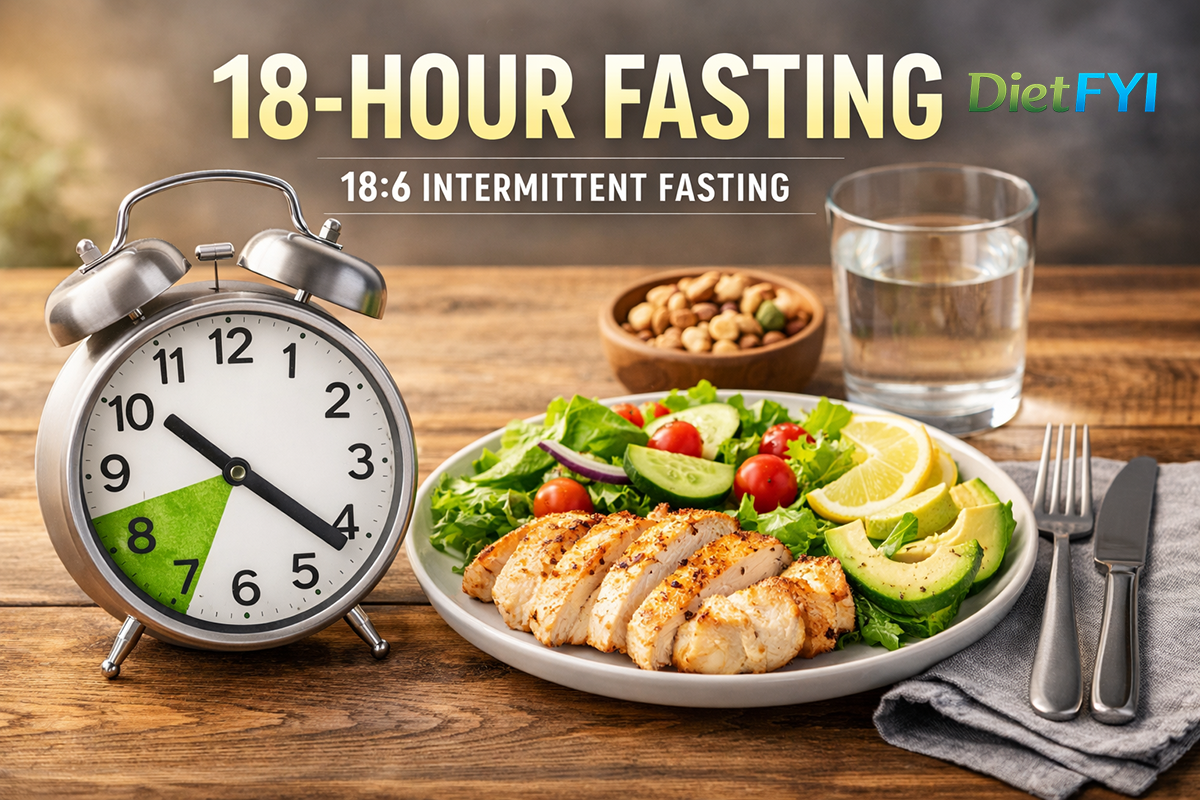
18-hour fasting is a simple intermittent fasting schedule: you fast for 18 hours and eat within a 6-hour window. Done right, it can reduce snacking, simplify meals, and support steady fat loss—without complicated rules.
What Is 18-Hour Fasting?
18-hour fasting (often called 18:6) means you fast for 18 hours and eat during a 6-hour window. Most people eat two meals (and sometimes a small snack) during the eating window.
- Fast: 18 hours (water, black coffee, plain tea are common)
- Eat: 6 hours (usually 2 meals)
18:6 Schedule Examples
| Style | Eating Window | Works best for |
|---|---|---|
| Lunch + Dinner | 12pm–6pm | People who prefer skipping breakfast |
| Early Window | 10am–4pm | Early eaters; improves evening snacking control |
| Later Window | 2pm–8pm | Busy mornings; social dinners |
Consistency beats perfection. Pick a window you can repeat most days.
How to Start (Beginner-Friendly)
- Start with 14–16 hours if you’re new, then move to 18.
- Fix electrolytes if you feel “off” (salt + water).
- Eat real meals in your window—don’t “snack fast.”
- Prioritize protein and fiber at both meals.
What Breaks a Fast?
People fast for different reasons (appetite control, calorie reduction, metabolic goals), so “breaking a fast” depends on your goal. For most weight-loss and routine consistency, the simplest approach is: avoid calories during the fasting window.
| Usually OK during fasting | Usually breaks the fast |
|---|---|
| Water, plain tea, black coffee | Sugar, creamers, milk, juice, soda |
| Electrolytes with no sugar (label-check) | Protein drinks, snacks, “a bite here and there” |
| Salt in water/broth (if needed) | “Zero-calorie” items that trigger cravings (varies) |
If cravings are your problem, keep the fasting window “clean” and save flavor for meals.
Best Meal Structure for 18:6
To make 18-hour fasting feel easy, meals should be filling and balanced:
- Protein: the anchor (chicken, eggs, fish, lean beef, tofu)
- Fiber: vegetables, beans/lentils (if they fit your plan), berries
- Smart carbs or low-carb: choose what keeps hunger stable
- Healthy fats: add for satiety (olive oil, avocado, nuts)
- Meal 1: protein + big salad/veg + olive oil dressing
- Meal 2: protein + veg + optional starch (or low-carb swap)
Simple Meal Ideas (18:6 Friendly)
| Meal 1 ideas | Meal 2 ideas |
|---|---|
| Chicken salad bowl + avocado | Salmon + roasted vegetables |
| Eggs + spinach + fruit (small) | Steak or turkey + salad + olive oil |
| Tuna salad lettuce wraps | Bunless burgers + sautéed mushrooms |
| Greek yogurt (plain) + berries + nuts (small) | Stir-fry protein + vegetables (light sauce) |
Common 18-Hour Fasting Mistakes
- Under-eating protein → hunger spikes, cravings, late-night snacking
- “Snack window” instead of meals → easy overeating
- Not replacing electrolytes → headache, fatigue, “crashing”
- Breaking fast with sugar → rebound hunger
- Going too hard too fast → burnout and inconsistency
Safety Notes: Who Should Avoid 18-Hour Fasting?
Intermittent fasting isn’t for everyone. Talk with a clinician first if you are pregnant/nursing, have a history of eating disorders, are underweight, or take medications that affect blood sugar or blood pressure.
If fasting causes dizziness, fainting, confusion, or severe symptoms, stop and seek medical advice.
External References
Educational content only. This page is not medical advice.
18-Hour Fasting FAQ
Is 18-hour fasting the same as 18:6?
Yes. 18:6 means 18 hours fasting and a 6-hour eating window.
How many meals should I eat on 18:6?
Most people do best with two real meals in the eating window. Snacks are optional, but removing snacks often improves results.
What can I drink during the fasting window?
Water, plain tea, and black coffee are common choices. Avoid sugary drinks and calorie-containing creamers if your goal is fat loss.
Why do I feel tired or get headaches when fasting?
It’s often electrolytes and hydration. Salt your meals, drink water consistently, and consider a sugar-free electrolyte option.
How do I break a fast without getting super hungry?
Break your fast with a protein-based meal and fiber (vegetables/salad). Avoid starting with sugar, which can trigger rebound hunger.