
DietFYI • Diet Hub
Keto Diet Hub
Keto (ketogenic diet) is a low-carb, higher-fat approach designed to shift your body toward using fat and ketones for fuel. This hub gives you the essentials, the rules that matter, and the exact pages to follow next.
Quick Start: Keto in 5 Steps
- Keep net carbs low (most beginners start around 20–50g/day).
- Eat enough protein (don’t “fat-bomb” your way through keto).
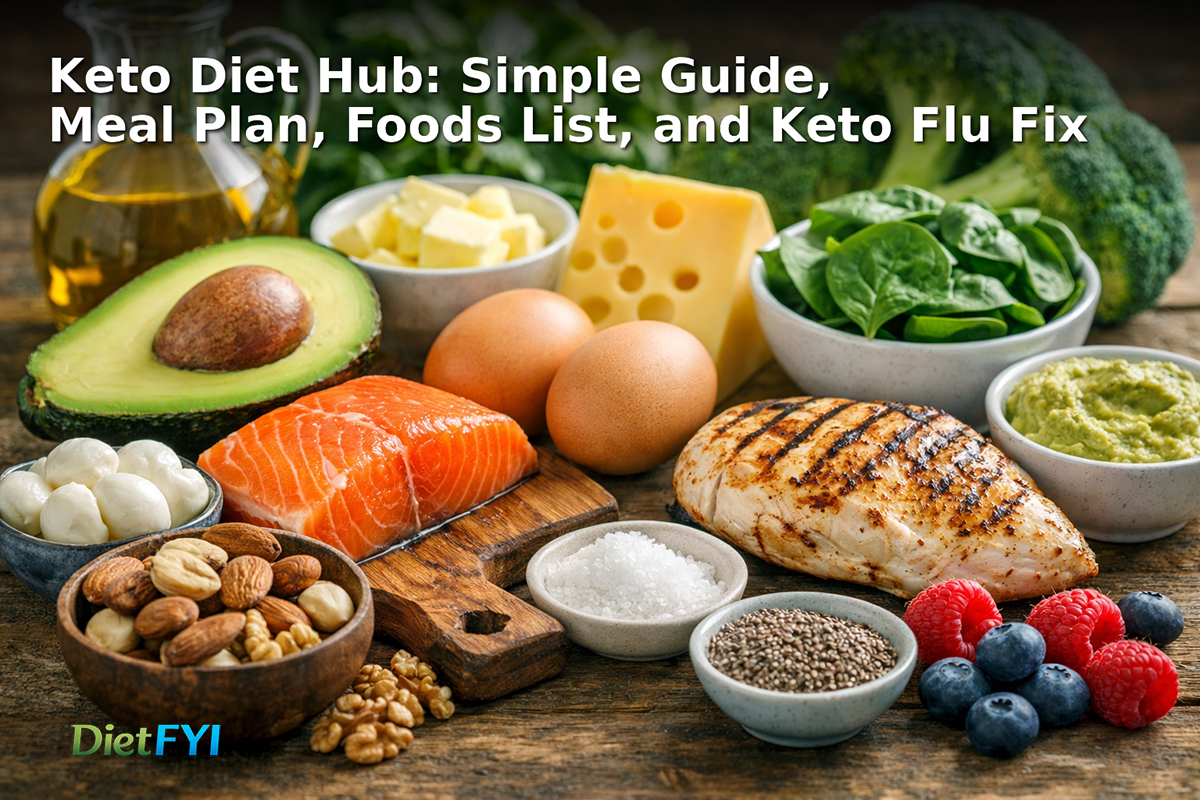
- Choose whole foods (meat, fish, eggs, low-carb veg, olive oil, nuts).
- Fix electrolytes (salt + magnesium + potassium food sources) to avoid keto flu.
- Stay consistent for 2–4 weeks before judging results.
What Is the Keto Diet?
Keto is a low-carb eating pattern that encourages your body to rely more on fat and ketones for energy. For many people, keto works because it reduces refined carbs, simplifies choices, and can reduce hunger—making it easier to stay consistent.
Keto isn’t required for fat loss. It’s one option. If you want a “less strict” approach, see: Mediterranean Diet.
Keto Macros (Simple Version)
Most keto success comes down to keeping carbs low, keeping protein adequate, and letting fat fill the rest—without forcing extra fat.
| Macro | What to do | Beginner tip |
|---|---|---|
| Carbs | Keep net carbs low. | Start with low-carb veggies + avoid sugar and starches. |
| Protein | Eat enough daily. | Anchor each meal with a protein source. |
| Fat | Use to feel satisfied. | Add fat if hungry—don’t force it if not. |
Keto Silo Pages (Follow This Order)
These pages are designed to work together. Start with the meal plan, then learn the foods list, then fix keto flu and mistakes.
✅ Keto Meal Plan
Beginner-friendly structure you can repeat (shopping list, meals, and swaps).
Go to /keto-diet/meal-plan/ →🥩 Foods to Eat
Exact keto-friendly foods + “safe” staples for easy grocery runs.
Go to /keto-diet/foods-to-eat/ →🚫 Foods to Avoid
The most common carb traps that stall progress (and better alternatives).
Go to /keto-diet/foods-to-avoid/ →😵 Keto Flu Fix
Headaches, fatigue, cramps? Usually electrolytes + not enough food quality.
Go to /keto-diet/keto-flu/ →🧮 Keto Macros Calculator
Estimate a practical macro range and avoid extreme “zero carb” mistakes.
Go to /keto-diet/macros-calculator/ →⚠️ Keto Mistakes
Why people stall: keto snacks, low protein, hidden carbs, sleep, and stress.
Go to /keto-diet/mistakes/ →Who Should Be Careful With Keto
Keto isn’t appropriate for everyone. If you’re pregnant, nursing, have a medical condition, or take medications—especially for diabetes— talk to a clinician before starting.
- People taking glucose-lowering medications
- History of eating disorders
- Kidney or liver disease (requires medical oversight)
Keto for Belly Fat
Keto can help some people reduce belly fat because cravings drop and food choices become simpler. But it still comes down to consistency. If belly fat is your #1 goal, combine keto with:
- Strength training (preserve muscle)
- Walking (low-stress calorie burn)
- Sleep (keeps cravings under control)
External References
For medical context on low-carb diets and healthy weight management:
- NIH (NIDDK): Weight Management
- CDC: Healthy Weight
- Cleveland Clinic: Ketogenic Diet
- Mayo Clinic: Low-Carb Diet
Educational content only. This hub is not medical advice.
Keto Diet FAQ
How many carbs can I eat on keto?
Many beginners start around 20–50g net carbs per day. The right level depends on your goals and response. Focus on low-carb veggies and avoid sugars and starches.
Is keto safe long-term?
Some people do well long-term, others prefer cycling or switching to a less strict approach. If you have a medical condition or take medications, talk with a clinician.
What is keto flu?
Keto flu describes temporary symptoms during early carb reduction (fatigue, headache, cramps). It’s often linked to low electrolytes, especially sodium.
Can I lose belly fat on keto?
Yes—keto can help reduce belly fat when it improves appetite control and consistency. For best results, combine keto with strength training, walking, and good sleep.